
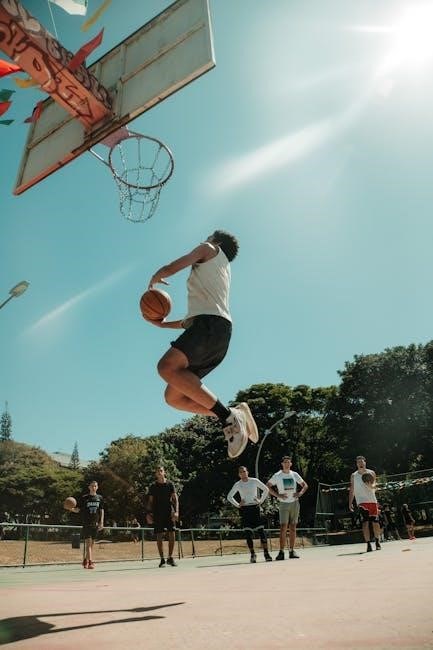
Basketball Manual: A Comprehensive Guide
Today is 03/31/2026 12:12:16 (). This manual details basketball’s intricacies, covering rules, skills, strategy, and common infractions for players and coaches alike.
I. Foundations of Basketball
Understanding the roots of basketball is crucial for appreciating its modern form. Invented in 1891 by James Naismith, the game evolved from a need for indoor activity during harsh winters, initially using peach baskets and a soccer ball.
Early rules were simple, focusing on passing and shooting, with running with the ball prohibited – a precursor to the traveling rule we know today. Over time, the game gained popularity, leading to standardized rules, the introduction of dribbling, and the development of organized leagues.
The foundation rests on core principles of teamwork, athleticism, and strategic thinking. A solid grasp of these fundamentals is essential for both players and coaches, setting the stage for advanced skill development and competitive play. This section will explore the historical context and the basic regulations governing the sport.
A. History and Evolution of the Game
Basketball’s genesis lies in December 1891 at Springfield College, Massachusetts. James Naismith, a physical education instructor, sought a less injury-prone sport than football for indoor recreation. He devised thirteen basic rules, utilizing peach baskets as hoops and a soccer ball.
The initial game emphasized passing and shooting, prohibiting running with the ball – laying the groundwork for the traveling violation. Early modifications included open-bottomed baskets and the introduction of backboards to prevent spectators from interfering.
The early 20th century saw the sport’s rapid spread through YMCA associations and colleges, leading to standardized rules and the formation of the first professional leagues. Dribbling was formally introduced, transforming offensive strategies and paving the way for the dynamic game we recognize today.
B. Basic Rules and Regulations
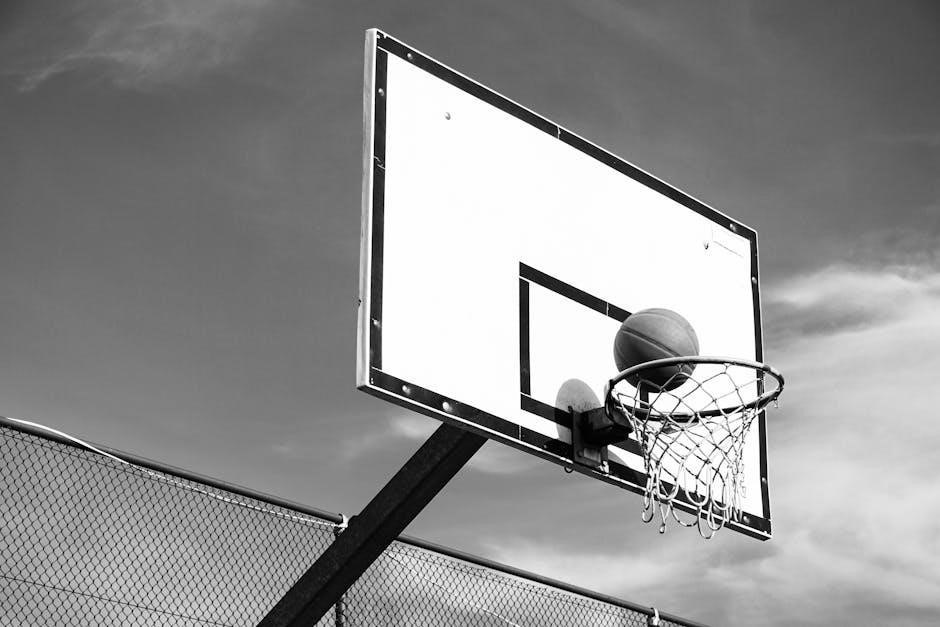
A basketball game involves two teams of five players aiming to score by shooting a ball through the opponent’s hoop. Key regulations govern gameplay, ensuring fairness and structure. Players advance the ball by dribbling (bouncing while moving) or passing to teammates.
A standard game consists of four quarters, with specific time lengths varying by level (e.g., NBA, college, high school). Scoring occurs via field goals (2 or 3 points) and free throws (1 point), awarded after certain fouls. Violations, like traveling (illegal movement with the ball), result in a turnover.
Fouls involve illegal contact, categorized as personal (incidental contact) or technical (unsportsmanlike conduct). Accumulated fouls can lead to player disqualification. Understanding these fundamental rules is crucial for both players and spectators.
II. Essential Skills – Offense
Mastering offensive skills is paramount for basketball success. This section focuses on techniques enabling players to effectively score and create opportunities. Dribbling allows ball control and movement, requiring practice for both speed and change of direction. Shooting demands proper form – balance, eye focus, and follow-through – honed through consistent repetition.

Passing is vital for team play, encompassing chest passes, bounce passes, and overhead passes, all requiring accuracy and timing. Offensive positioning involves spacing, cutting, and screening to create openings and exploit defensive weaknesses. Effective offense isn’t solely about individual brilliance; it’s about coordinated teamwork.
Developing these skills requires dedication, drills, and game-time application. Players must continually refine their abilities to maximize scoring potential and contribute to a dynamic offensive system.
A. Dribbling Techniques
Effective dribbling is the cornerstone of offensive basketball, enabling players to advance the ball and create scoring opportunities. Control is paramount; keep the ball low, using fingertips rather than the palm. Practice both stationary and moving drills to build muscle memory and coordination.
Key techniques include the crossover, allowing quick directional changes, and the behind-the-back dribble for deceptive maneuvers. Protecting the ball is crucial – use your body to shield it from defenders. Head up dribbling allows for court awareness and passing options. Mastering these skills requires consistent effort.
Variations like the speed dribble and hesitation dribble add complexity. A skilled dribbler can break down defenses and dictate the pace of the game.
B. Shooting Form and Practice
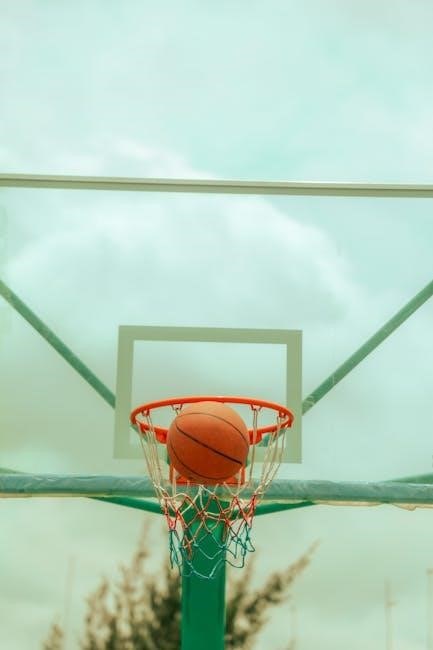
Consistent shooting form is vital for accuracy and range. Begin with BEEF – Balance, Eyes, Elbow, Follow-Through. Maintain a balanced stance, focus your eyes on the target, keep your elbow tucked in, and fully extend your arm with a proper wrist snap. Repetition is key; dedicate time to shooting drills daily.
Practice various shot types: jump shots, layups, and free throws. Form shooting, starting close to the basket, builds foundational technique. Gradually increase distance as your form improves. Record your shooting percentage to track progress and identify areas for improvement.
Visualize success and maintain a positive mindset; Shooting is a skill honed through dedication and focused practice.
C. Passing Accuracy and Types
Accurate passing is crucial for effective offense, enabling quick ball movement and creating scoring opportunities. Master several passing types: chest pass, bounce pass, overhead pass, and baseball pass. The chest pass is the most common, delivered with a firm push from the chest. A bounce pass is useful for navigating defenders, aiming for two-thirds of the distance.
Overhead passes excel at clearing defenders, while baseball passes cover long distances quickly. Practice passing against a wall or with a partner, focusing on target accuracy and speed. Lead your receiver, anticipating their movement.
Proper technique involves stepping towards your target and following through with your hands.
D. Offensive Positioning and Movement
Effective offensive positioning maximizes spacing and creates driving lanes. Players should maintain triangular spacing, allowing for easy passing and cutting opportunities. Constant movement is key – avoid standing still! Utilize cuts (backdoor, V-cuts, L-cuts) to get open and disrupt the defense. Understand the importance of screening, setting legal picks to free up teammates.
Spacing prevents defensive congestion, while timing ensures cuts are made at the right moment. Read the defense and react accordingly; adjust your positioning based on their movements. Fill empty spaces and be ready to receive a pass.
Proper footwork is essential for quick cuts and efficient movement.
III. Essential Skills – Defense
Defensive prowess is crucial for success, demanding more than just effort. Mastering a low defensive stance with a wide base provides stability and quick reaction time. Footwork is paramount – shuffle steps allow for lateral movement while staying balanced. Anticipation and reading the opponent’s movements are vital for effective defense.
Communication is key; call out screens and rotations to ensure everyone is aware. Understand the principles of denial, preventing the offensive player from receiving the ball. Focus on containment, forcing the ball handler towards help defenders.
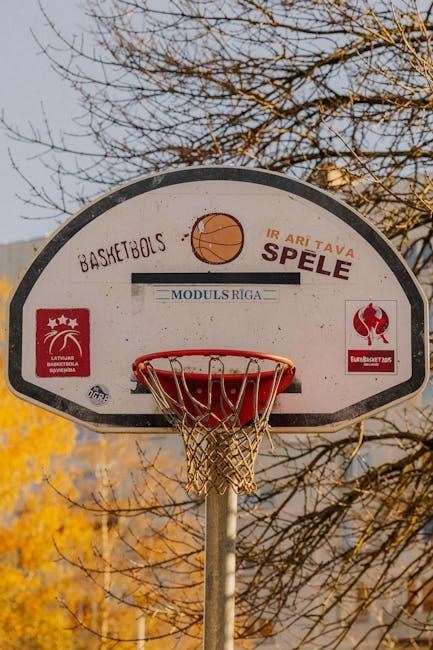
Rebounding, a defensive skill, secures possessions and limits second-chance opportunities.
A. Defensive Stance and Footwork
A solid defensive stance is the foundation of all defensive efforts. Maintain a low center of gravity with feet shoulder-width apart, knees bent, and back straight. Weight should be balanced, allowing for quick reactions in any direction. Arms are extended outwards, ready to deflect passes or contest shots.
Footwork emphasizes quick, controlled movements. The shuffle step is essential for lateral movement, keeping feet from crossing and maintaining balance. Avoid reaching or extending the feet, which can lead to being beaten. Practice sliding drills to improve agility and speed.
Proper footwork enables effective containment and prevents opponents from driving past.
B. Man-to-Man Defense Strategies
Man-to-man defense assigns each player a specific opponent to guard. Success relies on individual defensive skills, communication, and relentless effort. Players must stay between their assigned opponent and the basket, denying easy access to the scoring area.
Key strategies include denial defense, preventing the opponent from receiving the ball, and help-side defense, providing assistance when a teammate is beaten. Effective communication is vital for switching assignments and covering for each other.
Players should anticipate their opponent’s moves, contest shots, and actively pursue rebounds. Maintaining a consistent defensive intensity throughout the game is crucial for success in man-to-man schemes.
C. Zone Defense Principles
Zone defense involves players guarding specific areas of the court rather than individual opponents. This strategy prioritizes protecting the basket and forcing opponents into contested shots. Common zone formations include the 2-3, 3-2, and 1-3-1, each offering unique strengths and weaknesses.
Effective zone defense requires communication, quick rotations, and a collective understanding of responsibilities. Players must actively close out on shooters and anticipate passing lanes to intercept the ball. Rebounding becomes a team effort, with players boxing out opponents within their designated zones.
Successfully implementing a zone defense relies on disrupting the opponent’s offensive flow and capitalizing on turnovers. Adjustments are often needed based on the opponent’s offensive strengths and weaknesses.
D. Rebounding Techniques
Rebounding, a crucial aspect of basketball, involves securing possession of the ball after a missed shot. Box-out technique is fundamental: establishing position between your opponent and the basket, preventing them from reaching the rebound.
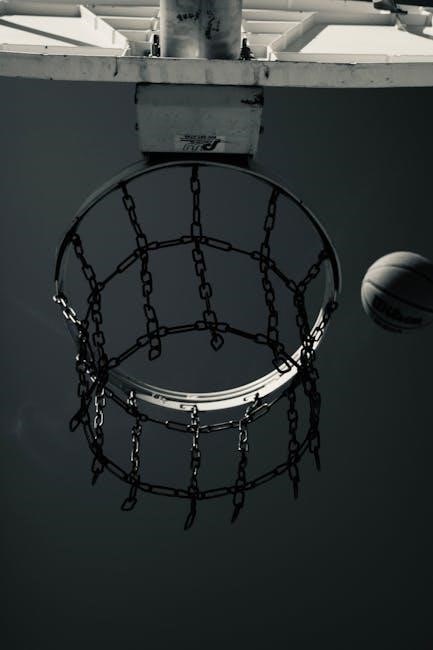
Players should maintain a wide base, using their body to shield their opponent while simultaneously tracking the ball’s trajectory. Jumping at the peak of the ball’s arc maximizes reach and secures possession. Strong hands and a firm grip are essential for controlling the rebound.
Offensive rebounding provides second-chance points, while defensive rebounding ends opponent possessions. Anticipation, positioning, and aggressive pursuit are key to becoming a dominant rebounder, significantly impacting game outcomes.
IV. Understanding Game Strategy
Game strategy transcends individual skills, demanding a comprehensive understanding of team dynamics and opponent weaknesses. Offensive plays, like pick-and-rolls and isolation plays, create scoring opportunities, requiring precise timing and execution. Defensive strategies, including man-to-man and zone defenses, aim to disrupt the opponent’s offense.
Successful teams adapt their strategies based on game situations and opponent adjustments. Fast breaks capitalize on turnovers, transitioning quickly from defense to offense for high-percentage shots. Recognizing mismatches and exploiting them is vital.
Effective communication, player awareness, and a coach’s ability to make timely adjustments are paramount for strategic success, ultimately determining the game’s outcome;
A. Offensive Plays and Formations
Offensive plays are pre-designed sequences of movements intended to create scoring opportunities. Common formations include the triangle offense, emphasizing spacing and passing, and the motion offense, relying on continuous player movement and reads. The pick-and-roll, a staple play, utilizes a screen to free up a ball-handler for a shot or drive.
Isolation plays focus on giving a skilled player space to operate one-on-one. Effective play execution requires precise timing, crisp passing, and players understanding their roles. Formations must adapt to personnel strengths and opponent defenses.
Successful offenses blend structured plays with improvisational freedom, maximizing scoring potential and keeping the defense guessing.
B. Defensive Strategies and Adjustments
Defensive strategies aim to prevent the opposing team from scoring. Man-to-man defense assigns each player to guard a specific opponent, emphasizing individual responsibility and quick reactions. Zone defense divides the court into areas, with players guarding anyone entering their zone, prioritizing team positioning.
Effective defense requires constant communication, help rotations, and anticipating opponent movements. Adjustments are crucial; switching between man-to-man and zone, doubling the ball-handler, or altering help-side positioning based on game situations.
Successful defenses disrupt offensive flow, force turnovers, and limit high-percentage shots, ultimately controlling the game’s tempo and outcome.
C. Fast Breaks and Transition Offense
Fast breaks capitalize on defensive transitions, aiming for quick scores before the defense can fully reorganize. Successful fast breaks require speed, accurate outlet passes, and players sprinting to fill lanes. Transition offense is a broader concept, encompassing quick movement from defense to offense, even if it doesn’t result in an immediate fast break.
Key elements include spacing, reading the defense, and making quick decisions. Players must be aware of passing options and opportunities for layups or open jump shots. Effective transition offense often involves a primary ball-handler pushing the pace and teammates cutting towards the basket.
Mastering these techniques creates scoring opportunities and puts constant pressure on the opposing team’s defense.
V. Common Fouls and Violations
Understanding fouls and violations is crucial for players and officials alike. Fouls involve illegal contact with an opponent, resulting in free throws or possession changes. Violations are infractions of the rules that don’t involve contact, leading to a turnover. Recognizing these distinctions is paramount.
Common fouls include personal fouls (e.g., blocking, charging) and technical fouls (e.g., unsportsmanlike conduct). Violations encompass actions like traveling – taking illegal steps with the ball – and double dribbling, where a player dribbles, stops, and then dribbles again.
Accurate officiating and player awareness minimize disruptions and ensure fair play throughout the game.
A. Traveling: Rules and Prevention
Traveling occurs when a player moves their pivot foot illegally while holding the ball. The pivot foot is established upon gaining control after dribbling or receiving a pass. Lifting the pivot foot before releasing the ball constitutes a violation, resulting in a turnover.
Understanding the gather step is key; it allows a player to transition from dribbling to shooting without traveling. Players must also avoid dragging their pivot foot. Maintaining balance and control are vital.
Preventing traveling involves practicing proper footwork, establishing a firm pivot, and being aware of foot placement during movement. Consistent drills and focused attention minimize traveling calls.
B. Double Dribble and Carrying the Ball
A double dribble happens when a player dribbles the ball with both hands simultaneously or regains control of the dribble after it has been voluntarily ended, then dribbles again. Once a player stops dribbling, they cannot begin again; passing or shooting must follow.
Carrying the ball, also known as palming, occurs when a player’s hand comes underneath the ball while dribbling, giving them undue control. This is a subtle violation often missed, requiring referees to closely observe hand positioning.
To avoid these violations, players should practice dribbling with fingertips, maintaining a consistent rhythm, and fully releasing the ball on each bounce. Proper technique and awareness are crucial for clean dribbling.
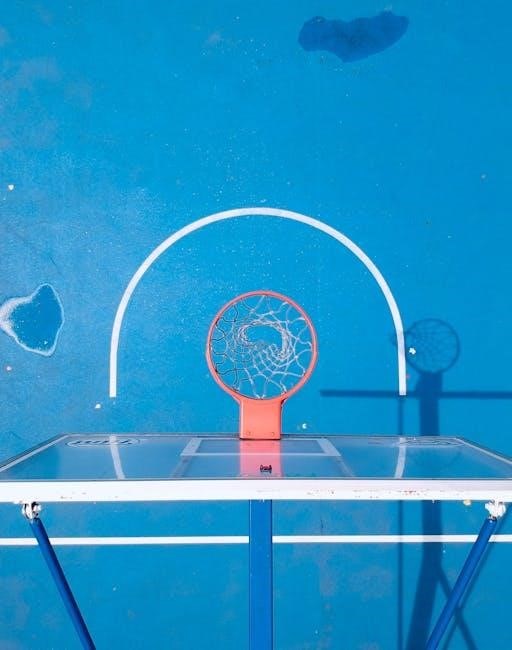
C. Personal Fouls and Free Throws
Personal fouls involve illegal physical contact with an opponent, hindering their movement. These include blocking, charging, holding, illegal screening, and pushing. Accumulating too many personal fouls results in disqualification – typically five or six, depending on the league.
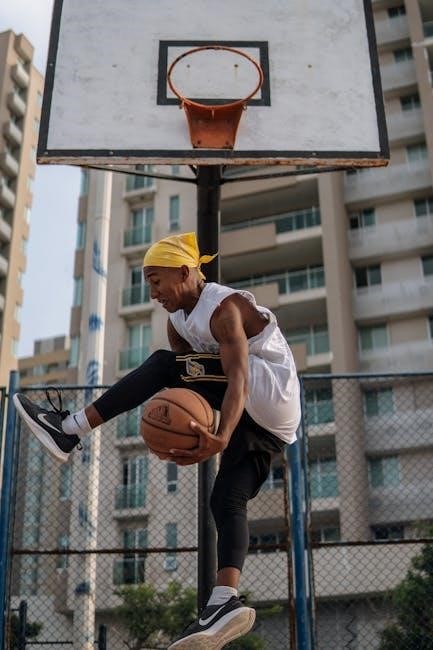
When a player is fouled while in the act of shooting, they are awarded free throws. The number of free throws depends on where the shot was attempted (two for shots inside the three-point arc, three for those beyond it).
Free throws are uncontested shots taken from the free-throw line. Consistent practice of free-throw technique – stance, grip, and release – is vital for maximizing scoring opportunities.
D. Technical Fouls and Penalties
Technical fouls differ from personal fouls, addressing unsportsmanlike conduct or procedural violations. Examples include arguing with officials, excessive timeouts, delay of game tactics, or disrespectful behavior. Both players and coaches can receive technical fouls.
Penalties for technical fouls typically involve the opposing team receiving one or two free throws, plus possession of the ball at the division line. Multiple technical fouls can lead to ejection from the game.
Flagrant fouls, a severe type of personal foul involving excessive or unnecessary contact, also carry significant penalties, potentially including free throws and automatic ejection. Understanding these distinctions is crucial for maintaining sportsmanship and fair play.